Seeing as this is a local paper that many people read, a large number of people who read these articles will take this and become their own "expert" and blindly lead their kids to believe that increased flexibility will improve sport performance. Sometimes common wisdom is neither common, nor wise...
Friday, 2 May 2014
The "Educated" Expert: When common wisdom is neither common, nor wise
Seeing as this is a local paper that many people read, a large number of people who read these articles will take this and become their own "expert" and blindly lead their kids to believe that increased flexibility will improve sport performance. Sometimes common wisdom is neither common, nor wise...
Wednesday, 19 February 2014
The "Not So Rotator" Rotator Cuff
Rotator cuff injuries are commonly diagnosed. Most of them, with no specific diagnosis as to which rotator cuff muscle(s) are the problem. More importantly, for rehabilitative purposes, we should have a better understanding of what this "rotator cuff" actually does.

When we learn about the rotator cuff in anatomy class, we look at the four muscles that make up the rotator cuff: supraspinatus, infraspinatus, subscapularis, and teres minor. We tend to look at these muscles in isolation. For instance, we see the supraspinatus as a ABductor (lifting the arm away from the body), the infraspinatus (and teres minor) are external rotators (pointing thumbs backwards with palms facing to the sky) and that the subscapularis is an internal rotator (allowing us to reach into our back pocket). Unfortunately, this has guided many rehabilitative programs based on simple/isolated movements for each individual muscle.
If you look at the shoulder joint from a biomechanical standpoint, these muscles do very little of the isolated movements. This is due to the fact that out big muscles around our shoulder do the "heavy lifting" or gross movements while the "rotator cuff" group acts as stabilizers. Even more important is how they perform this stabilizing function. When the "rotator cuff" group contracts in concert (all muscles contract at once), they provide a tremendous amount of COMPRESSION for the shoulder joint (holding it in place) while the "heavy lifters" do all the movement. In my opinion, the "rotator cuff" should be renamed the "compressor cuff"
There is utility to doing isolated rotator cuff exercises (you know the ones I mean...the ones that you always see people doing at the gym with the therabands). However, their utility is limited and really should be used as the basis for simple"compressor cuff" rehabilitation. Once activation and stability is achieved through simple exercises, progressive exercises offering challenges in different movements and planes should be added to make sure the "compressor cuff" is providing COMPRESSION (and thus, increasing stability) through an entire range.

When we learn about the rotator cuff in anatomy class, we look at the four muscles that make up the rotator cuff: supraspinatus, infraspinatus, subscapularis, and teres minor. We tend to look at these muscles in isolation. For instance, we see the supraspinatus as a ABductor (lifting the arm away from the body), the infraspinatus (and teres minor) are external rotators (pointing thumbs backwards with palms facing to the sky) and that the subscapularis is an internal rotator (allowing us to reach into our back pocket). Unfortunately, this has guided many rehabilitative programs based on simple/isolated movements for each individual muscle.
There is utility to doing isolated rotator cuff exercises (you know the ones I mean...the ones that you always see people doing at the gym with the therabands). However, their utility is limited and really should be used as the basis for simple"compressor cuff" rehabilitation. Once activation and stability is achieved through simple exercises, progressive exercises offering challenges in different movements and planes should be added to make sure the "compressor cuff" is providing COMPRESSION (and thus, increasing stability) through an entire range.
Wednesday, 6 November 2013
No Such Thing as Muscle Memory
I've been told that if you return back to training after a brief absence, your muscles will "remember" what to do and how to perform. They will "remember" how to hypertrophy (get bigger).
Here is the thing...your muscles are not smart. In fact, I'd say your muscles are quite stupid. They have no memory, and they do not remember how to do things.
You do however, have a brain and nervous system. Your brain is quite clever. Your brain stores movement patterns, your brain "remembers" how to perform complex tasks. Your brain is connected to your muscles by nerves. Your brain receives feedback from your muscles about length and tension, as well as sends signals to your muscles to undergo contraction (and relaxation). Your brain is responsible for balance, coordination, speed and movement (being drunk is a great example of how movement and coordination is controlled by the brain...not that I condone experimenting to prove my point!)The brain is like the guy pulling the strings on the marionette. The muscles simply do what they are told!
There is no such thing as muscle memory. Muscles are not smart...but your brain is quite clever!
Tuesday, 22 October 2013
How did I injure myself? (And how do I avoid doing it again?)
The definition of injury is quite simple:
When the applied load becomes greater than the tolerance a tissue can stand, you sustain injury.
This may be easier to understand if we use a simple example. Let us pretend that we had two different branches or sticks. One of the sticks was from an older tree and one of the sticks were from a sapling (or a younger tree).
Let's take a look at the younger branch. You would likely find that it is more flexible and can tolerate more bend than the older branch. Thus, you can apply more force (load) through the smaller branch before it "snaps" or breaks (and quite often a younger branch will not break right through, only partially through).
The definition of injury can be applied to any tissue in the body. From cartilage (vertebral discs, meniscus in the knee, or articular cartilage), every ligament, bone, joint capsule, nerve, muscle, tendon etc.
The answer to how to avoid injury? Don't overload the tissues in your body! Make sure that any movement you do is within a safe capacity (this also includes sitting and stress on back!)
Wednesday, 25 September 2013
The Empathetic Doctor: Suffering for Empathy
empathy em·pa·thy (Ä›m'pÉ™-thÄ“)
n.
n.
- Direct identification with, understanding of, and vicarious experience of another person's situation, feelings, and motives.
I understand that pain is a subjective symptom. It is difficult to quantify pain. It is definitely easier to understand someones pain if you have experienced the same or similar pain that a person is suffering from.I have been athletic for most of my life. I am fortunate to have been relatively injury free for most of my sporting career. I have had a few broken bones, a number of sprained ankles, and a hand full of concussions. I am still involved in athletics and am dealing with a few more aches and pains than I did when I was younger. I currently suffer from a minor meniscus tear in my knee that may require surgery in the future, I have a small rotator cuff tear in my shoulder (from years of pitching in baseball with poor mechanics), and am currently dealing with a high ankle sprain (from a hockey game I played a few days ago). Dealing with these injuries helps me better understand what someone with knee pain, or shoulder pain, or an ankle sprain would go through, as well as what would be expected for treatment and recovery.
Though it is never fortunate when one suffers an injury, I believe I am fortunate to have experienced what these injuries feel like. I believe that this makes me more empathetic towards patients who have suffered or are currently suffering from these types of "aches and pains." I deal with athletic (and non-athletic) patients who suffer from similar complaints. In fact, some of them find it quite surprising that when I explain their symptoms to them while they are describing what their problem is!
Tuesday, 17 September 2013
The Crossfit Conundrum: Good or Bad?
Before I start, I should qualify that this is not a hack against Crossfit or a promotion of Crossfit. It is my opinion based on some of the stuff I've read, some of the stuff I've tried and some of the stuff I've seen. I have tons of friends who do Crossfit and a number of friends who are actually Crossfit coaches. I have also been to and experience Crossfit first hand and did enjoy my workouts.
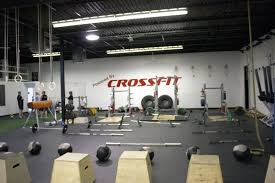
| Crossfit Gym |
| Regular Gym |
I also have concerns about the accessibility. Anyone can go online and look up the Workout of the Day (WOD). It may call for extremely high volume or max weights. This should be fine for someone who is experience, but for a novice lifter it could be disastrous. To Crossfit's credit, they have programs for novices who want to come try Crossfit. They have coaches who are able to help you with mastery of lifting techniques.
I do like the culture that Crossfit has to offer. It is appealing to groups of people of similar caliber, and can get quite competitive. For many people, the challenge of competing against your friends helps to push your workouts.
The bottom line is that if your training is enjoyable, you will be more likely to continue on with it. So Crossfit-ON! But please do so safely!
Monday, 9 September 2013
Dr. Google...I think I have...
So you suffer from a bit of a headache, some nausea, fatigue, feeling chills at times, some neck pain, a bit of tingling in the fingers and some abdominal pain. Punch your symptoms into the computer and Dr. Google diagnoses you with:
Fibromyalgia
Complex Regional Pain Syndrome
Hypothyroidisim
Diabetes
Chronic Pain Syndrome
Hypertension
Meningitis
and...and...and
With all this information, how can someone accurately self diagnose themselves? Don't get me wrong, I think that knowledge is helpful, but if fallen into the wrong hands it can be a detriment and not an aid.
Something to think about when talking about symptoms. The definition of SYMPTOM is an objective change that cannot be observed or measured. Look at the list of symptoms: Headache, nausea, fatigue, tingling, pain; none of these can be measured (accurately). I believe this is why sometimes when you present with pain, some practitioners will tell you that "its all in your head." There is no good way to measure.
When you go to your doctor, they are looking at SIGNS that go along with common symptoms. SIGNS are objective changes that can be observed by clinician. For example, neck "pain" may go along with reduce range of motion in the neck indicating some type of joint dysfunction. A headache may go along with an elevated body temperature or fever indicating a local or systemic infection (that can also be measured by doing blood tests and looking at a blood cell count).Before you go jumping to conclusions about what you may be suffering from, maybe its time to check in with a health care professional to get a second opinion.
Subscribe to:
Posts (Atom)