Thursday, 22 January 2015

The ONE Thing that would STOP BACK PAIN and DEGENERATION

Yes, this is a bold statement, but hear me out for a second. 

Our spines are essentially a long, flexible rod.  The vertebrae are designed to withstand forces through the spine, and the discs between them allow for movement and mobility.  This is wonderful for us because it offers us the ability to tie our shoes, brush our teeth, pick up things off the ground, etc.  However, most of us abuse our privilege by spending too much time bending (even sitting), lifting and twisting.  Over years this abuse contributes to degeneration in our spine (usually after the age of 20-25 years old). You can also suffer back pain from the "blow up" or the bad lift/bend.    

The ONE thing that would STOP BACK PAIN and DEGENERATION is simple:

DO NOT BEND YOUR BACK

Now, I never said that this would be reasonable, but it is an answer to the problem.

Imagine our back was a long steel rod instead of the flexible one we have.  It would be near impossible to degenerate (or may take years of severe abuse) before the rod would break.   Of course this scenario is unreasonable because it would be impossible to bend to tie our shoes, pick up items off the ground, and would likely cause degeneration of other joints in the body due to changing movement patterns. 

Spinal fusion is grafting bone onto the spine or using instruments ...If you have ever talked to someone who has had spinal fusion surgery (usually done to relieve back pain and neurological symptoms), it is impossible to have degeneration at that segment (however, the segments above and below usually take more abuse in an attempt to pick of the slack for the lack of movement at the fused segment). The same occurs with someone who has had such bad degeneration that the segments fuse themselves.  It takes many years and most suffer a fair bit of pain as the degenerative process takes place, but pain tends to resolve over the long term as the segments fuse and stabilize (this is the same as surgery, but free!) 
Don't see what you like? Customize Your Frame
The morale of the story is that if you can minimize bending of the back, you will decrease the degenerative process, and minimize the likelihood of back pain. 

Thursday, 18 December 2014

Healthy Holiday Tips!

As 2014 comes to a close, you can expect a number of people with resolutions for the New Year.  Here are some health tips you can focus on:

1.  Focus on GOOD MOVEMENT

There are tons of training techniques and exercises with too narrow a focus (ie. biceps curl.)  Think more about the types of things you are doing in life and use those as your training tools.  Practicing good lifting, carrying, pushing and pulling will help guide your program for the New Year!

2. Always keep practicing

Some people do the same exercise program and find that they get bored after a while with the same exercises.  If you find you are bored of the same exercises, focus on improving technique, tweak a few things with these exercises and you will find it will improve your performance.  In my program, I am always looking to improve my pull ups, my squats, my deadlifts.  I know when I do a bad rep and when I do a great rep. 

3. Have a bit of fun with your exercise

No need to go to the gym and be intimidated by all the fancy equipment and all the people there.  No need to rely on an expensive machine that limits you to one defined movement.  You can use stairs, dumbbells, kettlebells, weighted vests, or even just using your own body weight.  This equipment (or lack of it) gives you more freedom to do thing that you would do in sport or for your daily activities.  If the gym isn't for you, try an exercise class, or yoga, or swimming.  Do something active with friends.  Whatever you choose, make sure you are enjoying it! 

4. Try something you aren't good at

Its always good to try something new.  How will you know whether you like it or not if you don't try it?  It can be scary trying something new, but once you take the first step the rest of the journey gets a lot shorter!

5. Take care of yourself

Everyone gets busy, but make sure you are taking time to take care of yourself.  Whether it is chiropractic, massage, acupuncture, or meditation, make sure you are taking some time for yourself through the year.  It is really a small investment in time and money that will have a huge impact on your future and your ability to remain healthy.


All the best for the holiday season! Looking forward to 2015!


Friday, 12 December 2014

The Crowbar Effect and Low Back Pain

Sometimes I like going back through some of the research articles I have previously read.  I find that I can always refresh or learn something new/again from many of these articles.

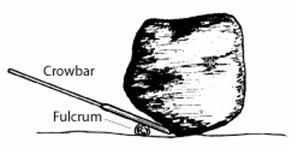
One of my favorite articles explains a "Crowbar Effect" that occurs in the low back with slouching.  This is exactly what most people experience when they sit! 

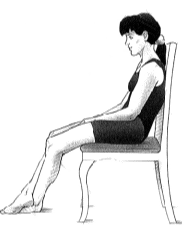
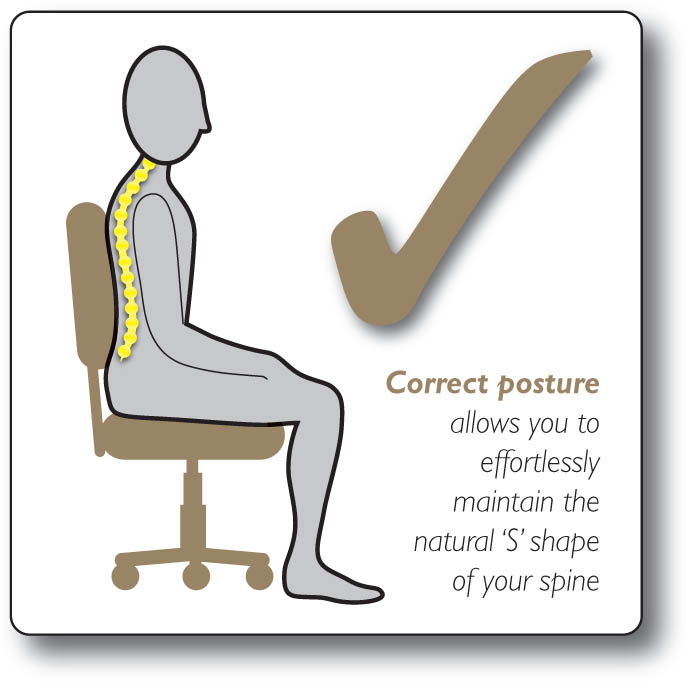
When we sit in a slouched position, the pelvis rotates posterior (hips roll backwards) and spine moves forward as we lose the lumbar curvature in the back.  As the curvature is reduced, the back stiffens and is akin to a "bar."  Ligaments that attach from the spine to the pelvis act as a fulcrum around L5 causing the proposed "Crowbar" effect.


They also propose that two conditions must be fulfilled for the crowbar effect to occur:

1.  Loss of lumbar lordosis (lumbar curvature)

2.  Body weight placed behind the ischial tuberosities (those bony bumps you sit on).

If you look at figure 4 in the article, it has some great diagrams to show "good" and "bad" sittinng.

If you work at a desk job, or you happen to do a lot of driving (sitting) this article pertains to you! 

The article can be viewed for free here


Picture

Friday, 5 December 2014

3 Exercises You Should be Doing Every Day to Improve Your Health

These are my 3 exercises to improve or maintain your health

1.  "Shoulder Blades in back pockets"  

Most people tell you to "sit up straight" or "stand up straight" by sticking your chest out and putting your shoulders back.  The problem with this is that most people tend to over-correct and reduce or minimize the curve in their thoracic spine (mid back).  In fact, if you have "pinched your shoulder blades together" you can sometimes feel stiffness or pinching in the mid back. 

I prefer showing people to slide their shoulder blades towards their back pocket.  Like magic, their shoulder blades flush against their rib cage (reducing scapular winging), and their mid back slouching automatically becomes corrected.  Most people even notice the curve in their neck becomes more normal with this exercise. 

2. "Pick up something off the ground"  ie. Deadlift

When most people pick stuff up off the ground, they tend to do so by bending the back (typically forward flexion of the lumbar spine). 

I aim to show people how to minimize bending of the back and maximize bending of the hip.  The hips are an ideal joint to use as they have a tremendous range of motion.  They also have large muscles (glutes) attached to them which are much more efficient at lifting (heavy) items as opposed to the low back muscles. 

3.  Deep Squat

Deep Squatting is very important for maintaining range of motion as we age.  You don't have to lift heavy weights to go into a deep squat (although if you are weight training, it is good to develop strength through full range.)  For range of motion (particularly the hip joint), if we don't use it, we can lose it.  This is a great way to defend against arthritis of the hip.  Cartilage in the hip (and the rest of the body) does not have a blood supply and thus needs to be "squished" to bring fluid/nutrients into and out of it.  For this to happen, we need to put joints through full ranges of motion. 


Gorilla Squatting Optimized Photograph


Friday, 28 November 2014

The Simple Cure for "Text Neck"

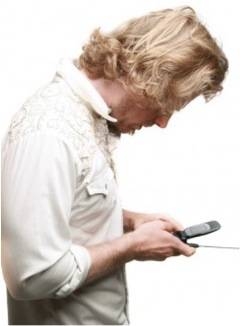
There has been an explosion over the topic "Text Neck."  There is a (scientific?) article that stated that people who text are at risk for putting their neck under undue stress.  This model crunches numbers and states that every inch we move our heads forward we put increasing force through our neck. 

The good news!  There is a simple cure!  Move your head and neck (and don't text for hours!) No need to sit up straight, keep your shoulders back, keep your eyes level.   JUST MOVE!  Don't be one position for a prolonged period of time!I have no doubt that the text neck posture does put some increased stress through cervical facets (the joints in your neck).  The cervical facets are angled like shingles on a roof.  When our neck is bent forward (such as reading a book, or when staring at a computer for hours, which is probably worse than texting) the joints get compressed.  Over a significant amount of time, this may cause degenerative conditions through the cervical spine. 


I would agree that the text neck posture is not a good position for your neck to be in, and if you minimize the time your neck is bent forward, it will reduce forces through your neck.  I think people are more at risk for other serious issues with texting such as texting and driving, or not paying attention to where you are walking while texting.

Please don't text and drive!


Tuesday, 25 November 2014

Stop trying to teach people "Perfect form." There is no such thing!

There is no such thing as perfect form, only good technique. There is no "one size fits all" for exercise and athletics. Seem like semantics? 

I was asked this question from a trainer once:  "If you had a 16 year old baseball player that threw a 90 mph fastball, but his throwing motion looked funny, do you tell him he needs to change the way he throws?"  If you do change his mechanics, how will that affect his velocity? 

I see this at the gym all the time.  People trying to "correct" each others form.  For example, I was resting by the squat rack today and someone was trying to teach someone how to squat.  They were telling them that they need to narrow their stance, and point their toes straight forward, and keep their knees from going over their toes, and to stick their butt backwards, etc.  I don't think it even occurred to these people that they may have a different shaped pelvis, different femur/tibia lengths, different ankle mechanics.  This is exactly why some people can squat comfortably and almost sit their butt on their heels, and why others have trouble getting thighs to parallel. 

When I am teaching/coaching someone exercises, I often give them as few instructions as I possibly can.  For squats, my instructions are usually as simple as; "let me see you squat."  If corrections need to be made to technique, we start by make alterations from there. 

The moral of the story is that everyone does things differently.  We should stop trying to make everyone do things the same way.  We should allow them to work within their limits and try to improve on technique with every session. 

Friday, 14 November 2014

Health is not "Self Help" Help me...Help you

I love my job!  I love helping people (get out of pain) and to teach people how to move better and be healthier.

I am not one to brag, as many who have seen me for treatment can attest to.  However, I am good at what I do.  One of the reasons I am good at what I do is because I am constantly learning.  I consider myself an expert in the field of health.

This is why I went to school for 9 years.  This is why I have done countless hours of continuing education.  This is why I read up-to-date papers and articles on topics pertaining to health. 

I do not give advice about things that I know very little about.  I will never tell a rocket scientist how to build a better rocket.  I will never tell an engineer how to build a better bridge.  Why is it that people feel it is appropriate to offer health information when they are not in the health field? 

Just the other day, I overheard a lady lecturing numerous other people to "eat more bananas if you are getting cramps."  How can she offer this advice without knowing someone's medical history?  Or without knowing the anatomy or physiology of muscle?  Where did she get this information?  Probably something that her mother told her when she was getting muscle cramps.

A gentleman was talking to another guy about various stretches he needed to do to get rid of his back pain?  Maybe the stretching was appropriate in his case, but why is it appropriate to pass this along to other people. 

Health should not be self help.  If you do not work in the health field, please refrain from offering your opinions and advice.  My advice:  seek professional help. 

college-advice