Sunday, 12 June 2016

Concussions: Would I let my kid play contact sport???


As a Chiropractor, and a Medical Director for a number of local teams, I have had numerous hours of training and have been certified in concussion testing and management of concussions.  I do believe that concussions are an issue, but if managed properly (just as any injury) prognosis and recovery are very good. 


I've debated with numerous people about the risks of concussion in contact sport.   Would I let my child play a contact sport?  Without hesitation; YES! 
Looking at the risks of contact sports, there is a distinct possibility of getting a concussion among many other injuries including, but not limited to:  muscle strain, joint sprain, fractured bones, joint dislocations, paralysis and death. 

Lets look at the benefits of sport:  Strategy and learning to work together with others toward a common goal, meeting new friends (some life long friends), mental stimulation, and improved fitness.

I believe that the risks for disease(s) are higher for those who choose not to be active (playing video games), for those who choose to smoke or drink, for those that go out to cause trouble in the evenings because they are not playing a sport.


In simple terms, contact sports do not have a concussion problem; they have a concussion management problem.  

Wednesday, 18 May 2016

To the people I look up to, thanks for all you have done! Thanks Dr. Paj

I never thought about it until recently.  If you are good at what you do, not too may people make comments or give you feedback.  Its when you are bad at your job, that's when people have no problems letting you know about it.

I had a former student of mine message me and tell me that I was inspirational to him when he was a student.  I was a bit caught off guard as it has been a few years since I have taught, but it is extremely flattering and humbling to receive such praise. 

It made me stop and think about some of the people I look up to (the "who do I want to be when I grow up" moment!) 

One of the biggest influences for me in my chiropractic career has to be Dr. Jason Pajaczkowski.  I had the great fortune to do my clinical internship under his watch for 6 months (which is nowhere near enough time to learn all he knows).  I'd list all his accomplishments, but it would take too long (his business card is on legal size paper he has so many letters after his name!)  Dr. Paj (as he is fondly know by his students) has a passion for teaching and mentoring students.  One of the things I remember from Clinical Grand Rounds during exam time (which meant it wasn't that well attended) was standing room only when Dr. Paj was the clinician. 

While I was doing my internship, Dr. Paj offered me the opportunity to see him work his magic at his clinic.  It was an amazing experience to watch and learn from him.  He showed me some of the subtle signs that are missed at times by other therapists, but aid in proper diagnosis (which in turn, leads to the correct treatment.) 

I still have a pile of Dr. Paj's notes that he provided us during my internship and find myself looking back over them from time to time.  I still find that every time I look at those notes, I learn something new from them.

I look up to Dr. Paj.  I think it is important (even though it has been an number of years since he has taught me) that he knows how much of an influence he has had on what I do, and who I have become! I have reached out to let him know how much I appreciated all of his mentorship.

If you have took the time to read this post, you could probably take another few minutes to reach out to someone who you look up to and let them know about it!  I can guarantee you they will appreciate it!


Thursday, 25 June 2015

Reasons why you DO NOT need to have a strong core

I have a lot of people tell me that they have a weak core and it needs to be strengthened. 

The first question I ask is; "What exactly is your core?" 

The second question is; "Why does it need to be stronger?" 

The answer to the first question is that our core is suppose to offer stability to an inherently poorly stabilized structure; the lumbar spine (the lower 5 vertebrae). 

The answer to the second question is a bit more complicated.  The simplest answer is that your core probably doesn't need to be stronger, it needs to last longer and work more efficiently. 

For most people core endurance is the limiting factor, not strength.  It matters how long your core can last for and how efficient your core is.

For instance, your core is meant to stabilize your spine.  If a certain level of contraction offers your spine stability, more contraction does not offer much more stability.  In fact, too much might also be a limiting factor!

So think about these things next time you are training your core.  It probably doesn't need to be stronger, it just needs to be more efficient!  


Wednesday, 6 May 2015

What actually happens when you "throw you back out"

People say it all the time; "I threw my back out."  What does this actually mean?  Did something in your back actually slip out of place?  Was it a vertebrae?  A disc? 

First off, bones (vertebrae) and discs rarely go "out of place."  This only happens with significant trauma, and if it does happen, you are in some serious trouble!  

The antiquated view of the "bone out of place" is common misconception of what actually happens when someone suffers from back pain.  Typically, the first description when someone "throws their back out" is that there was some sort of audible (sometimes inaudible) pop, click or clunk followed by increased back pain that limits mobility.  Ironically, someones back will "go out" while attempting to lift a light load (such as picking up a pen off the ground, or standing from a sitting position) but rarely from lifting a moderate or heavy load.

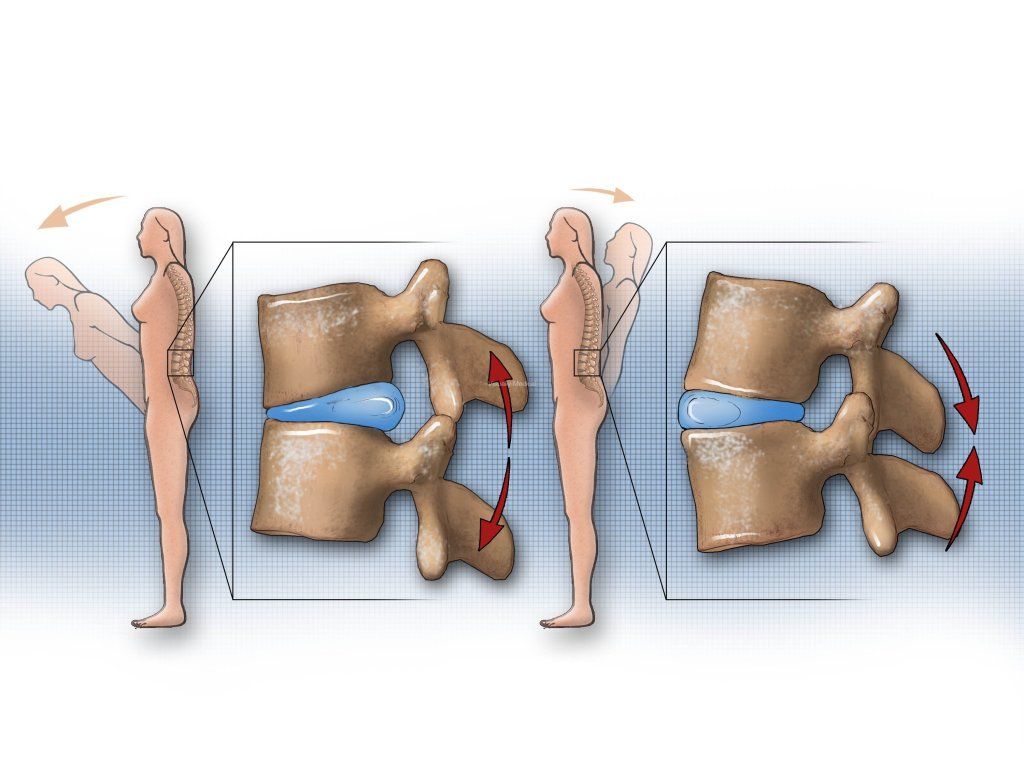
A better description of what really happens is that the joints in your back (facet joints between the vertebrae) get stuck together.  The vertebrae, joints and discs in your back are suppose to move like cogs on a machine.  If it does not mesh, it can cause joints to stick together and muscles to tighten up around them as a protective mechanism.  This is why you would find restriction in range of motion (patient having a hard time bending forward, backwards or sideways).

So if you suffer from back (or neck pain), you don't have to worry about your bones going out of place.  But it is a great idea to see your chiropractor to treat the problem!


Thursday, 2 April 2015

Iron Man Champ Jasper Blake teaches Dr. M about Running

With Spring right around the corner, running season has begun. This is the time of year I tend to see a variety of running related injuries flow into the clinic.

Rather than give you my take on running and running injuries, I thought I would go to a professional and ask them a number of questions about how they coach running!  

Meet Jasper Blake!  A former Iron Man Champion, triathlete and founder of the training company B78! 

***Most people don't think twice about running.  They just put on runners and head out the door, and wonder why they are sore or injured later on.  As a running coach, what do you tell your athletes to focus on?  Are there specific techniques?  Or do you just let them run with their own style?

The biggest thing people forget about running is how much impact there is. You take all of your body weight, throw it up in the air and then land on one foot. Your aerobic fitness is one thing but the ability to handle impact is another thing entirely and it's usually the one that gets people in the most trouble. 

Technically I focus on a few key areas:
1. Landing midfoot (or landing with your foot right underneath your body...not out in front, not behind)- the foot is a natural shock absorber not your heal. Land mid foot and you use your body as it was intended for running

2. Stand tall- proud posture- stack your bones. Often you will see people hunched over in various places which means they have to be engaged muscularly to hold themselves up. Standing tall allows the use of your skeleton for support

3. Slight forward lean (without hinging at the waist) allows you to use gravity for acceleration. 

4. Quick "light" cadence- be light or soft on impact and keep cadence on the higher side meaning don't lope around

Put it all together and you end up with good running technique. One really important thing to add is that in order to remains stable during impact we need great core and hip stability especially in longer events when the body starts to break down physically. All runners should have core and hip stability work in their program on a regular basis.

***What is/are the most common injury/injuries you see with running? 
Injuries that usually have to do with impact or tightness in certain areas. IT band issues are a big one and repetitive strain injuries like stress fractures are also a big one. One fairly common and odd one is when one of the small foot bones slides out of place- it's relatively easy to fix but really painful

***Is there a benefit to strength training (resistance training) to improve running outcomes (ie. would a runner benefit from going to the gym?)  Are there exercises that a runner can do that would help prevent injury?
Yes most definitely. I am a huge proponent of gym work. As mentioned above, core and hip stability is really important. I think it's also good to incorporate exercises that promote proper tracking of the knee (so lunges for example where knee tracking over big toe and not going side to side is promoted). I also like athletes to work on any imbalances and learn to move laterally with competence. Running and most endurance sports are very linear and that can cause weakness outside of linear movements which I feel puts athletes at risk of injury so I like working muscle groups that take an athlete out of linear plane.

***If you are looking to improve efficiency, should a runner try to increase stride length (decrease cadence) or decrease stride length (increase cadence)  
This is not a simple question to answer as there is so much at play but yes these are the two primary factors as it relates to speed and efficiency. Increasing stride length beyond your range of motion in terms of flexibility and muscular strength and coordination is not a good thing. So I would look first to increase cadence but I don't think that needs to go hand in hand with consciously decreasing stride length. Often when athletes try to deliberately increase stride length things get ugly because foot strike happens too far in front of the body (not underneath) and cadence decreases which is not always good. I think "efficient" stride length and cadence are on a sliding scale- when you are going slower, both will usually be on the lower end. As you increase speed both usually increase but only to a point. Eventually stride length will reach an optimal place or a place beyond which the athlete cannot coordinate or generate muscular force or cannot land on their foot properly. Likewise, cadence will increase to a rate beyond which the athlete cannot coordinate or even maintain that rate.
Balancing cadence and length to optimize what's best for each individual is the key- while maintaining the critical technical aspects that can help keep you injury free. 

***There are always questions about shoes?  I know there is no "one shoe that fits all" but what is your take on the technology of shoes?  What do you think about "pronation/motion" control shoes?  What do you think about "minimalist" or barefoot shoes? 

I think the number one goal of shoe companies is to sell you shoes so as much as they innovate they also need to keep throwing out new stuff so people buy shoes. Hence the movement from overbuilt shoes to minimal shoes now to Hooka type shoes- it all goes round and round and round and it's a bit ridiculous. 
There is no one size fits all- I think people who grow up in overbuilt shoes usually end up with issues- I believe barefoot kids are a good thing. But i've never been overly sold on barefoot adults on pavement- we may have been born to run in bare feet but pavement is relatively new. 
I personally like a neutral shoe that is not over built and without any posting. Then if you have issues you see a foot specialist for an appropriate orthotic and use a neutral shoe with it. 
I like my shoes uncomplicated- I use a Saucony Kinvara- it's light, neutral, no bells or whistles, just simple and I love it. However, if my run volume starts to get really high like in Ironman training I sometimes needed a bit of support or the muscles in my feet started to go a bit and I would get a bone that slid out of place which caused problems so sometimes an orthotic would help curb this.
I believe in rotating shoes so you are creating slightly different stress loads from time to time
I believe in running off road on varied terrain a great deal so you work yourself laterally and build some overall strength
I think the single greatest cause of injury is not shoes but inappropriate training or run mileage increases that don't respect ones ability to tolerate impact. If you build people up in a way that allows for adequate recovery between sessions and you do it progressively over time you can avoid many types of injuries  

***If you had one tip for an amateur runner (say training for 10km), what would it be?  

Respect the impact- build your mileage and intensity intelligently.

******************************************************************************

Thanks to Jasper Blake for taking the time to answer my questions!

To find out more about Jasper Blake and what he can do for you, please visit : 


Friday, 20 March 2015

You are not a Hero if you play or work through pain...you are just dumb

It is a theme:  "It doesn't hurt that much..."  "I can play through this..." 

We see it in the media with professional athletes.  Scoring the winning goal in the Stanley Cup with a broken foot, or getting knocked out, and 3 plays later catching a touchdown pass in the Super Bowl.

We see these people as Heros!  We want to emulate them.  If someone can play hurt, then why shouldn't I be able to go to work even though I can't lift my right arm over my head?
Here is a better question:  Why not find out what the problem is, and deal with it?  Why not get the treatment it need and get better before you return to work and/or play?
sports injury

I have seen the shift in sport over the last decade.  With the implementation of concussion protocols in professional and amateur leagues, the increased reliance on medical staff with decisions relating to return to sport, and advancements in technology to help with a proper diagnosis, people are starting to realize that injuries are serious and should be taken seriously.

"No pain, no gain" was from the 1980's.  That doesn't hold up anymore.  If it hurts, if you can't do the things that you need to do for work or sport, get it taken care of and don't return until you are recovered.  

Friday, 13 March 2015

Choose the Blue Pill and continue on with your blissful ignorance, or Choose the Red Pill and find out how far down the Rabbit Hole you will really go???

"This is your last chance. After this, there is no turning back. You take the blue pill—the story ends, you wake up in your bed and believe whatever you want to believe. You take the red pill—you stay in Wonderland and I show you how deep the rabbit hole goes. Remember: all I'm offering is the truth. Nothing more." (Morpheus speaking to Neo in the Matrix movie)

One of my favorite lines from the movie "the Matrix" where Neo has the choice to return to his "normal" life, or to find out what "the truth" really is.

As I see advertisement after advertisement for a variety of pain medications, gels and creams claiming to stop pain and allow you to return to your regular activities, it makes me wonder how many of us would choose to ignore the actual cause of the pain/problem.

I, for one, have always been curious about the truth behind what pain generators are, how poor mechanics and movements can be a cause or influence pain, and why we experience pain.  It is one of the reasons I went through all the education I did.  I am finding "how deep the Rabbit Hole goes" as I am always learning something new.  The more I work on good functional movement, the more I realize that I have a lot to learn.  I realize that I have colleagues and mentors that know a lot more than I do, and they are always learning something new. 

So it makes me wonder...what would you do?  Would you rather treat symptoms with pills, creams and gels while you go on with your life?  Or would you like to find out what the real causes of your symptoms are.  If you choose the later, realize that it may require some of your time and patience.  It may require you to get some treatment to help alleviate symptoms.  It may require you to spend some time to do rehabilitation, exercises, or to put some effort towards being healthier.  It may require effort on your part, but I can assure you that it will benefit you. 

So what would you choose, the Blue Pill? Or the Red Pill???

Friday, 27 February 2015

What am I really "fixing" when I treat a patient?

We are all made up of a variety of different kinds of cells.  Common cells work together for form different tissues (muscle, bone, skin etc.)  Groups of tissues work together to form organs (liver, heart, lungs etc).  Organs coordinate with each other to form numerous systems in the body (cardiovascular system, urinary system, muscular system).  These systems are interconnected and communicate with each other to allow for complex functions. 

As a therapist, what I am really doing is influencing cells.  Sometimes it is difficult to understand what we are doing because we can't actually see these cells!  When I treat a tissue (lets say muscle, but remember, I am treating more than just muscle!) I am looking to do is to stimulate cells (fibroblasts) and induce healing.  Treatment also affects the other systems in the body (for example, muscles and nerves are very closely related).   

chiropractic careHow we influence these cells is through putting different strain through them (tension, compression, shear, stretch).  This is the aim of many soft tissue techniques.  Stretching/tensioning ligaments and joint capsules affects the nervous system.  This is how mobilizations and adjusting techniques work. 

Many cells in the body have an amazing ability to regenerate (fibroblasts are amazing, neurons not so much).  Though cells can coordinate and heal the body on their own, sometimes they need a bit of a push in the right direction to get them there faster!   


Wednesday, 11 February 2015

The Quick Fix: The "Magic Pill" How come it takes me so long to get better?

"How come this is taking so long to get better."  Its a question I get asked all the time.

I realize that sometimes it is difficult to understand because we cannot "see" what the problem really is. 

This is common for back and neck pain.  The pain generator is generally something you cannot see.  For example, the joints may have become restricted, or there may be a mild muscle strain.  You feel SUBJECTIVE (what you feel) symptoms such as tightness, ache, pinching, stabbing.  However, you cannot OBJECTIVELY (what you can see or measure) determine the cause of the pain (and this is where people google their symptoms and come up with a hilarious number of possible causes!) 

I like to describe it in a way that most people would understand:

Imagine you cut your finger.  If it is a small cut, self care may be an option, but it does require care and (depending on the size of the cut) time to heal.  It will not heal overnight.

If you were to cut your finger with a larger cut, you would likely seek a professional to help (ie. may need stitches.)  This would require close (acute) care for several days to weeks (depending on the size of the cut) with numerous follow up visits to ensure that healing continues on the correct path.  

There are numerous factors involved in healing of the cut, as well as healing of the things that you cannot see.  Some of the aggravating factors can include work and daily activities, sleep and nutritional status. 

So unfortunately with injury, there is no "Magic Pill"  However, if you do take good care of yourself (and with a bit of treatment) injuries will improve much more quickly.  


Thursday, 5 February 2015

Low Back Pain 101: The Mechanics of Low Back Pain

Most of us will have suffered some type of low back pain in our life time, no matter how old you are (if you haven't I'd love to hear from you and find out what your secret is!) 

Not all low back pain is the same, but I do see some presentations of low back pain that are very common.  Here is one of the more common types of low back pain that I see:

PATIENT DESCRIBES:
-sometimes insidious (not sure how it happened) or felt something "pinch" deep in their low back
-most likely mechanism of injury is flexion or bending the back (ie. picking up something off the floor)
-described as dull/achy constant pain, with intermittent episodes of sharp stabbing pain with sudden movement
-usually worse in the morning and feels very stiff getting out of bed
-hard to put on shoes and socks on in the morning, but easier taking them off at the end of the day
-usually feels better with movement
-worse in prolonged positions such as sitting (particularly in flexion) or standing
-feels like it is "deep" or on my spine, but feels like a pulled muscle
-no pain going down leg(s) but ache into buttocks 

WHAT IS IT???

When a patient presents with these symptoms, and all other sinister causes of low back pain have been ruled out, I diagnose these patients with what I call "discogenic" low back pain.  Sometimes it freaks patients out to hear that a disc is involved.  They usually think the worst such as a herniated or bulging disc, but it isn't quite the case.

For me, discogenic pain means that the disc it self is the cause of the pain (here is where some of my colleagues would disagree with me, but I could settle my argument in another forum with them).  When I describe to patients what this type of pain is, I explain it as if the disc was "bruised."

REASONS FOR SYMPTOMS:

When the disc gets "bruised" it causes the deep/achy pain in the low back because that is where the disc is located.  Most people feel that their back gets "tight" because surrounding musculature will "brace" to help to prevent movement and pain.  The sharp/stab with sudden movement can be explained when the tissue around the disc gets pinched between the vertebrae with a rapid movement (especially sneezing or coughing.)

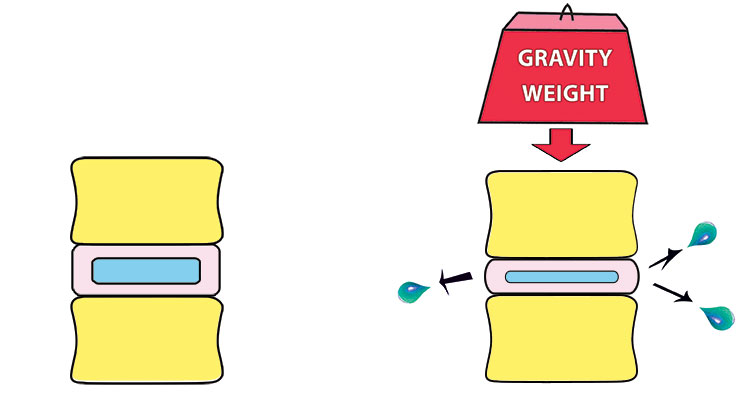
The difficult one for people to understand is why it typically feels worse in the morning.  Disc are made up of collagen.  Collagen is what is called hydrophilic (which means water loving.)  The discs will absorb water over night when they are non weight bearing and tend to swell or become superhydrated.  This is why we are taller in the morning (before we stand up and squeeze some of the fluid out.)  This is similar to a dish sponge that you add water to.  You can see the dish sponge increase in size.   After a few minutes of walking around, it squishes some of the fluid out of the discs and "normalizes" the size of the discs and makes it easier to move. 

WHY DOES IT TAKE SO LONG TO GET BETTER?

I try to explain this to patients that "bruises" take time to heal.  Depending on how bad the bruise is, it may take longer to heal.  If the "bruise" becomes reaggravated it may take a bit longer to heal.  Unfortunately it can take days to weeks to get better.

WHAT SHOULD I DO WHEN THIS HAPPENS?

Discogenic pain may subside on its own.  However, I always recommend a course of treatment as I have had a ton of success getting people back on track much faster than if you let it run its course.  


Thursday, 22 January 2015

The ONE Thing that would STOP BACK PAIN and DEGENERATION

Yes, this is a bold statement, but hear me out for a second. 

Our spines are essentially a long, flexible rod.  The vertebrae are designed to withstand forces through the spine, and the discs between them allow for movement and mobility.  This is wonderful for us because it offers us the ability to tie our shoes, brush our teeth, pick up things off the ground, etc.  However, most of us abuse our privilege by spending too much time bending (even sitting), lifting and twisting.  Over years this abuse contributes to degeneration in our spine (usually after the age of 20-25 years old). You can also suffer back pain from the "blow up" or the bad lift/bend.    

The ONE thing that would STOP BACK PAIN and DEGENERATION is simple:

DO NOT BEND YOUR BACK

Now, I never said that this would be reasonable, but it is an answer to the problem.

Imagine our back was a long steel rod instead of the flexible one we have.  It would be near impossible to degenerate (or may take years of severe abuse) before the rod would break.   Of course this scenario is unreasonable because it would be impossible to bend to tie our shoes, pick up items off the ground, and would likely cause degeneration of other joints in the body due to changing movement patterns. 

Spinal fusion is grafting bone onto the spine or using instruments ...If you have ever talked to someone who has had spinal fusion surgery (usually done to relieve back pain and neurological symptoms), it is impossible to have degeneration at that segment (however, the segments above and below usually take more abuse in an attempt to pick of the slack for the lack of movement at the fused segment). The same occurs with someone who has had such bad degeneration that the segments fuse themselves.  It takes many years and most suffer a fair bit of pain as the degenerative process takes place, but pain tends to resolve over the long term as the segments fuse and stabilize (this is the same as surgery, but free!) 
Don't see what you like? Customize Your Frame
The morale of the story is that if you can minimize bending of the back, you will decrease the degenerative process, and minimize the likelihood of back pain. 

Thursday, 18 December 2014

Healthy Holiday Tips!

As 2014 comes to a close, you can expect a number of people with resolutions for the New Year.  Here are some health tips you can focus on:

1.  Focus on GOOD MOVEMENT

There are tons of training techniques and exercises with too narrow a focus (ie. biceps curl.)  Think more about the types of things you are doing in life and use those as your training tools.  Practicing good lifting, carrying, pushing and pulling will help guide your program for the New Year!

2. Always keep practicing

Some people do the same exercise program and find that they get bored after a while with the same exercises.  If you find you are bored of the same exercises, focus on improving technique, tweak a few things with these exercises and you will find it will improve your performance.  In my program, I am always looking to improve my pull ups, my squats, my deadlifts.  I know when I do a bad rep and when I do a great rep. 

3. Have a bit of fun with your exercise

No need to go to the gym and be intimidated by all the fancy equipment and all the people there.  No need to rely on an expensive machine that limits you to one defined movement.  You can use stairs, dumbbells, kettlebells, weighted vests, or even just using your own body weight.  This equipment (or lack of it) gives you more freedom to do thing that you would do in sport or for your daily activities.  If the gym isn't for you, try an exercise class, or yoga, or swimming.  Do something active with friends.  Whatever you choose, make sure you are enjoying it! 

4. Try something you aren't good at

Its always good to try something new.  How will you know whether you like it or not if you don't try it?  It can be scary trying something new, but once you take the first step the rest of the journey gets a lot shorter!

5. Take care of yourself

Everyone gets busy, but make sure you are taking time to take care of yourself.  Whether it is chiropractic, massage, acupuncture, or meditation, make sure you are taking some time for yourself through the year.  It is really a small investment in time and money that will have a huge impact on your future and your ability to remain healthy.


All the best for the holiday season! Looking forward to 2015!


Friday, 12 December 2014

The Crowbar Effect and Low Back Pain

Sometimes I like going back through some of the research articles I have previously read.  I find that I can always refresh or learn something new/again from many of these articles.

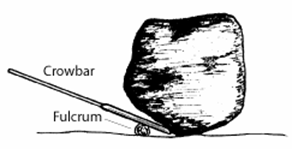
One of my favorite articles explains a "Crowbar Effect" that occurs in the low back with slouching.  This is exactly what most people experience when they sit! 

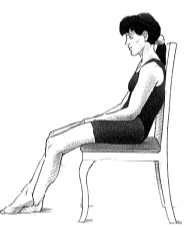
When we sit in a slouched position, the pelvis rotates posterior (hips roll backwards) and spine moves forward as we lose the lumbar curvature in the back.  As the curvature is reduced, the back stiffens and is akin to a "bar."  Ligaments that attach from the spine to the pelvis act as a fulcrum around L5 causing the proposed "Crowbar" effect.


They also propose that two conditions must be fulfilled for the crowbar effect to occur:

1.  Loss of lumbar lordosis (lumbar curvature)

2.  Body weight placed behind the ischial tuberosities (those bony bumps you sit on).

If you look at figure 4 in the article, it has some great diagrams to show "good" and "bad" sittinng.

If you work at a desk job, or you happen to do a lot of driving (sitting) this article pertains to you! 

The article can be viewed for free here


Picture

Friday, 5 December 2014

3 Exercises You Should be Doing Every Day to Improve Your Health

These are my 3 exercises to improve or maintain your health

1.  "Shoulder Blades in back pockets"  

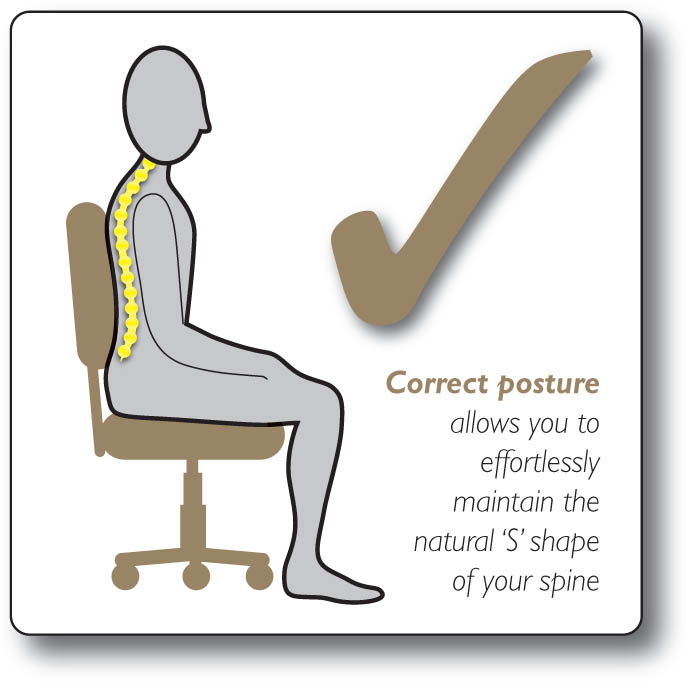
Most people tell you to "sit up straight" or "stand up straight" by sticking your chest out and putting your shoulders back.  The problem with this is that most people tend to over-correct and reduce or minimize the curve in their thoracic spine (mid back).  In fact, if you have "pinched your shoulder blades together" you can sometimes feel stiffness or pinching in the mid back. 

I prefer showing people to slide their shoulder blades towards their back pocket.  Like magic, their shoulder blades flush against their rib cage (reducing scapular winging), and their mid back slouching automatically becomes corrected.  Most people even notice the curve in their neck becomes more normal with this exercise. 

2. "Pick up something off the ground"  ie. Deadlift

When most people pick stuff up off the ground, they tend to do so by bending the back (typically forward flexion of the lumbar spine). 

I aim to show people how to minimize bending of the back and maximize bending of the hip.  The hips are an ideal joint to use as they have a tremendous range of motion.  They also have large muscles (glutes) attached to them which are much more efficient at lifting (heavy) items as opposed to the low back muscles. 

3.  Deep Squat

Deep Squatting is very important for maintaining range of motion as we age.  You don't have to lift heavy weights to go into a deep squat (although if you are weight training, it is good to develop strength through full range.)  For range of motion (particularly the hip joint), if we don't use it, we can lose it.  This is a great way to defend against arthritis of the hip.  Cartilage in the hip (and the rest of the body) does not have a blood supply and thus needs to be "squished" to bring fluid/nutrients into and out of it.  For this to happen, we need to put joints through full ranges of motion. 


Gorilla Squatting Optimized Photograph


Friday, 28 November 2014

The Simple Cure for "Text Neck"

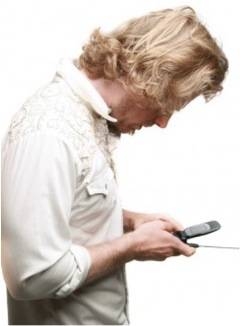
There has been an explosion over the topic "Text Neck."  There is a (scientific?) article that stated that people who text are at risk for putting their neck under undue stress.  This model crunches numbers and states that every inch we move our heads forward we put increasing force through our neck. 

The good news!  There is a simple cure!  Move your head and neck (and don't text for hours!) No need to sit up straight, keep your shoulders back, keep your eyes level.   JUST MOVE!  Don't be one position for a prolonged period of time!I have no doubt that the text neck posture does put some increased stress through cervical facets (the joints in your neck).  The cervical facets are angled like shingles on a roof.  When our neck is bent forward (such as reading a book, or when staring at a computer for hours, which is probably worse than texting) the joints get compressed.  Over a significant amount of time, this may cause degenerative conditions through the cervical spine. 


I would agree that the text neck posture is not a good position for your neck to be in, and if you minimize the time your neck is bent forward, it will reduce forces through your neck.  I think people are more at risk for other serious issues with texting such as texting and driving, or not paying attention to where you are walking while texting.

Please don't text and drive!


Tuesday, 25 November 2014

Stop trying to teach people "Perfect form." There is no such thing!

There is no such thing as perfect form, only good technique. There is no "one size fits all" for exercise and athletics. Seem like semantics? 

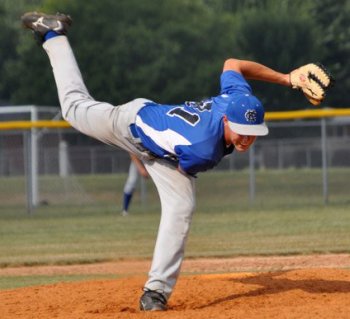
I was asked this question from a trainer once:  "If you had a 16 year old baseball player that threw a 90 mph fastball, but his throwing motion looked funny, do you tell him he needs to change the way he throws?"  If you do change his mechanics, how will that affect his velocity? 

I see this at the gym all the time.  People trying to "correct" each others form.  For example, I was resting by the squat rack today and someone was trying to teach someone how to squat.  They were telling them that they need to narrow their stance, and point their toes straight forward, and keep their knees from going over their toes, and to stick their butt backwards, etc.  I don't think it even occurred to these people that they may have a different shaped pelvis, different femur/tibia lengths, different ankle mechanics.  This is exactly why some people can squat comfortably and almost sit their butt on their heels, and why others have trouble getting thighs to parallel. 

When I am teaching/coaching someone exercises, I often give them as few instructions as I possibly can.  For squats, my instructions are usually as simple as; "let me see you squat."  If corrections need to be made to technique, we start by make alterations from there. 

The moral of the story is that everyone does things differently.  We should stop trying to make everyone do things the same way.  We should allow them to work within their limits and try to improve on technique with every session.